Why the south shore
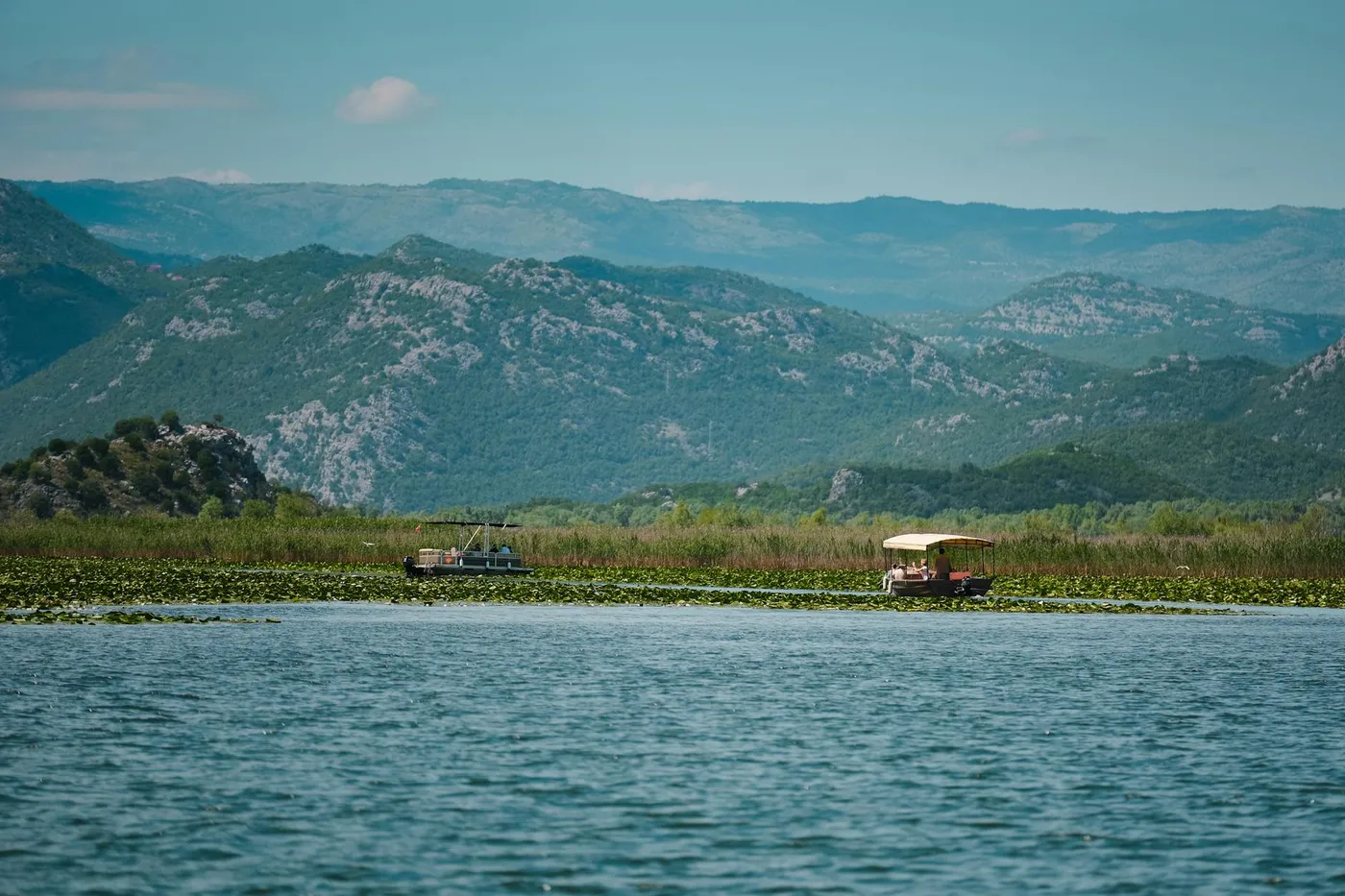
Most visitors see Lake Skadar from Virpazar on the western shore, the boat-tour hub, 30 minutes from Podgorica. The southern shore, reached from the Ulcinj side, is quieter and in several ways more beautiful. The villages here are mostly ethnically Albanian, the mountains drop steeply into the water, and a handful of small offshore islands hold medieval monasteries you can visit by local boat.
Lake Skadar is the largest lake in the Balkans, roughly two-thirds in Montenegro, the rest in Albania, and the Montenegrin side is protected as a national park. It is one of the last European breeding grounds for the Dalmatian pelican and home to over 280 recorded bird species.
The route from Ulcinj
From Ulcinj, take the road north-east through Vladimir toward Ostros and Murići. The drive is roughly 50 km and takes about an hour and fifteen minutes. The first section up to Vladimir is straightforward two-lane road. Beyond that, the road climbs into the Rumija range and narrows, with blind corners and occasional goats. It's comfortable for any standard car driven carefully, no 4x4 required, but leave nervous drivers or camper vans at home.
The final descent to the lake opens up a long panoramic view. There are several unofficial pull-offs for photographs; the last one before the village is the best.
The beach at Murići
Murići itself has a long pebble-and-shingle beach directly on the lake, with a large shaded car park set back among the trees. It's one of the few lake beaches with proper facilities: a small restaurant, sunbeds for rent in summer, showers, and kayak hire. Entry to the beach is free; the car park has a modest seasonal fee. The water is fresh (this is a lake, not the sea) and warm from June through September, typically several degrees warmer than the Adriatic at the same time of year.
The monastery islands
Offshore from Murići lie several small islands with 14th-15th century Orthodox monasteries, Beška, Moračnik, Starčevo. Beška, the nearest, has a pair of churches; Moračnik has a single church and a defensive tower. Local boatmen run short trips from the Murići jetty, usually around €10-15 per person for a two-island loop depending on the size of the group. Bookings are informal, ask at the beach restaurant or the boat owners directly.
Wear modest clothing if you plan to enter the monastery churches. A couple of the sites are staffed by one or two resident monks; others are unstaffed but open.
Wildlife and birdlife
Early morning is the best time for wildlife. From the shore at Murići you can often see cormorants, herons, and, with luck and binoculars, pelicans fishing the shallows on the opposite side. The lake's reedbeds support one of the richest wetland ecosystems in southern Europe, and the south-shore road passes several stretches where you can pull over and watch without a boat.
Villages and local colour
The settlements along this stretch, Ostros, Donji Murići, and the small hamlets scattered up the slopes, are mostly ethnically Albanian, predominantly Muslim, and noticeably less tourism-shaped than the coast. Stone houses are built tight against the hillside, vegetable gardens terraced below, and you'll pass herd goats on the road. There are no major sights in the villages themselves, but a short stop for coffee at one of the small cafés in Ostros is worth the detour, prices are local, the coffee is Turkish-style and thick, and someone will usually have enough English or Italian to chat.
Driving style on the pass
The Rumija section between Vladimir and the lake is the only stretch that asks a little care. Expect single-track width at points, blind hairpins without mirrors, occasional rockfall debris on the surface, and local drivers who know every corner and will take them fast. The convention, as in much of rural Montenegro, is that downhill gives way to uphill where passing is tight, because the uphill driver has fewer pull-off options. Use a low gear on the descent rather than constant braking.
Getting back
Two options. Retrace the route via Vladimir for the simpler drive back to Ulcinj. Or continue north-west along the lake road, pick up the highway at Virpazar, and return to the coast via Bar, a longer loop but a more varied day. If you still have energy, the ancient olive groves around Ulcinj and Valdanos make a good late-afternoon stop on the way home.
Practical tips
- Fuel: Fill up in Ulcinj. There is a small station at Vladimir but nothing reliable beyond it.
- Food: The beach restaurant at Murići serves fresh lake fish (carp and bleak are traditional), grilled trout, and simple meat dishes.
- Park fee: National park entrance is charged at gates or on boats, carry a few euros in cash.
- Mobile signal: Patchy in the Rumija pass. Download offline maps before you leave.
- Best months: May-June for bird migration and wildflowers; September for warmest swimming and empty shores.